TL; DR Summary
- A2P calling (Application-to-Person calling) sends automated voice messages from businesses to customers for marketing, alerts, and reminders.
- Application-to-Person calls, unlike P2P communications, originate from software platforms that enable companies to communicate efficiently and affordably.
- Some benefits include lower costs (50–70% less), the ability to handle thousands of calls in minutes, and the opportunity to interact with customers in real time.
- A2P calling spam risks include lack of consent, spoofed numbers, and excessive frequency; Opt-in consent, authenticated caller IDs, and TCPA/GDPR compliance are necessary for prevention.
- AI text-to-speech, conversational AI solutions, and call routing are all used in modern A2P calling technologies to make individualized, human-like encounters that boost ROI.
Introduction
Your phone is ringing. When you answer, you don't hear a human; instead, you hear a pre-recorded message advertising a flash sale or an appointment reminder. That's Application-to-Person calling in action.
Businesses use Application-to-Person (A2P) calling, which involves sending automated voice messages to consumers without having a human contact each number. It's the technology that powers marketing campaigns, delivery notifications, fraud warnings, and appointment confirmations. If you've ever received a robocall from your bank or a political campaign, you've experienced A2P calls.
Application-to-Person calling is not only easy for enterprises; it also brings in money. Companies utilize it to cut down on no-shows, speed up customer service, and reach more people without paying a lot of workers. But here's the thing: not all A2P calls are the same. Some systems are hard to use and full of spam. Some, like AI text-to-speech and conversational AI apps, feel almost like people.
Let's examine the true meaning of Application-to-Person calling, its significance, and how companies can use it without upsetting their clients.
What Is A2P Calling
Application-to-Person calling (A2P calling) is a way for software programs to make automated voice calls to people. AI voice agents, CRM platforms, and appointment schedulers are examples of automated systems that generate A2P calls, as opposed to person-to-person (P2P) calls, which are made by humans who dial and converse.
It's like getting a text from a business, but with your voice. A system makes the call depending on rules or events that have been set up ahead of time, such as a missed payment or an approaching appointment. This way, a person doesn't have to do it.
Here's how Application-to-Person calling works in practice:
- A customer books a doctor's appointment online.
- The clinic's scheduling software automatically makes an A2P call 24 hours before the appointment.
- The customer gets a voice message that was either recorded ahead of time or made by AI that confirms the time and place.
A2P calling is everywhere in modern business. It is used by banks for fraud warnings. Delivery updates are sent by e-commerce businesses. Reminders help healthcare providers decrease no-shows. Millions of voters are reached by political campaigns. Even Amazon's Alexa can make A2P calls for hands-free shopping confirmations.
The key difference between A2P calling and traditional telemarketing is automation. Telemarketers need people to work for them. Application-to-Person calling uses technology to make communication easier, cheaper, and faster.
A2P Calling Vs P2P Messaging
People commonly mix up A2P calling and P2P messaging, yet they serve separate objectives. Here's the breakdown:
A2P calling sends automated voice messages from applications to people. P2P messaging (Person-to-Person messaging) is direct communication between two individuals, like texting a friend or calling your coworker.
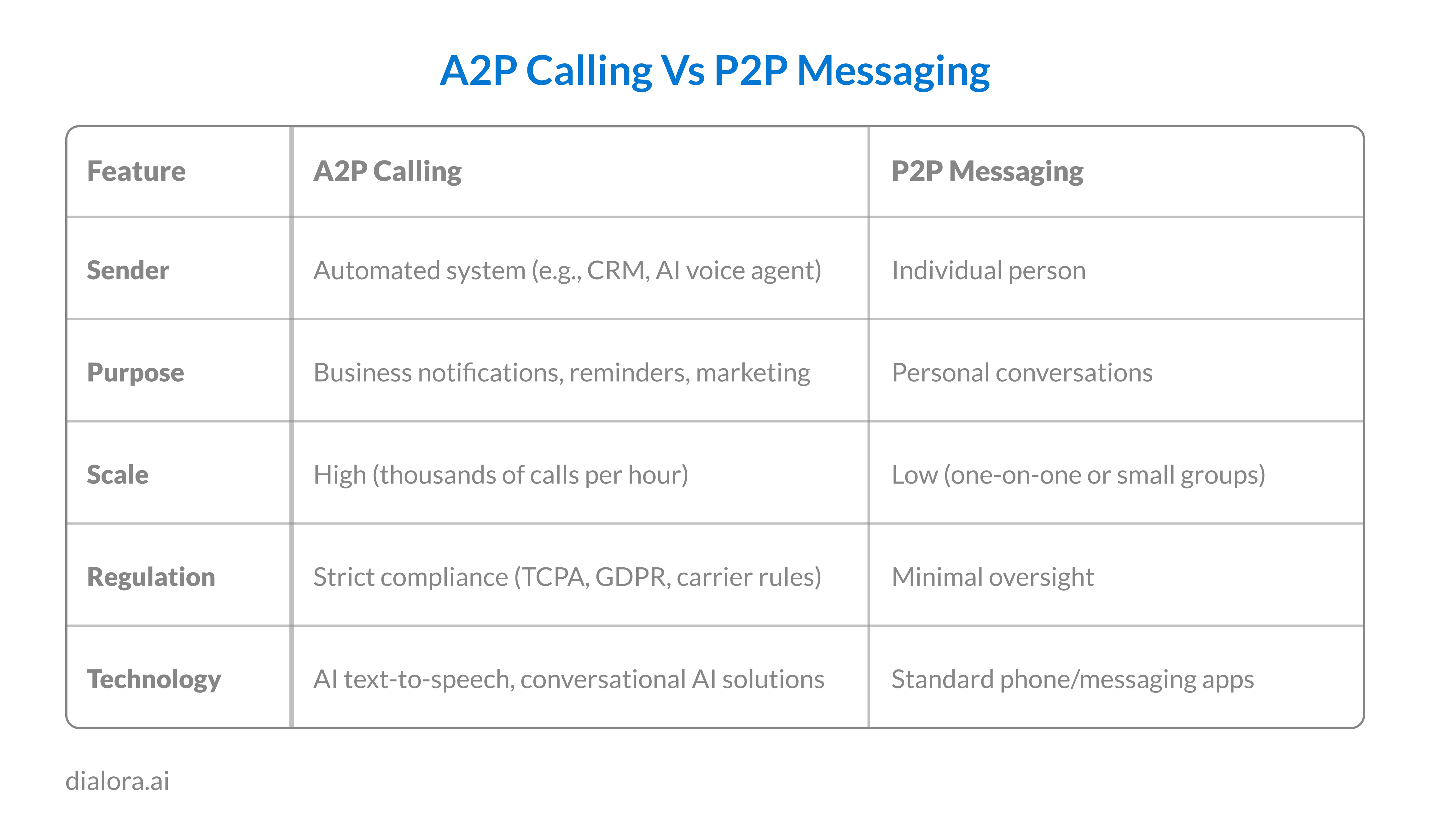
Why does this matter? Application-to-Person calling faces stricter regulations because it's used at scale. Carriers check A2P calls for spam, fraud, and infringement of rules. If a firm sends A2P calls without getting permission first, it could get fined, have its numbers banned, and hurt its reputation.
P2P messaging, on the other hand, is mostly unregulated because it's personal. You can SMS your friend about dinner plans without getting their consent. However, sending 10,000 SMS messages promoting a sale is considered A2P messaging, and receivers must give their express opt-in agreement.
AI in telecom has made things less clear. AI voice agents can make A2P calls sound like a conversation by copying how people talk. This makes the customer experience better, but it also raises moral considerations regarding honesty. Should firms tell people when an A2P call is made by AI? Most regulators say yes.
How A2P Calling Works in Business
Businesses use Application-to-Person calling to automate repetitive communication tasks, saving time and money while improving customer engagement. Here's how it plays out across industries:
- Healthcare: Clinics send A2P calls for appointment reminders, prescription refills, and lab results. According to a study by MGMA, automated reminders cut down on no-shows by 30%. Hospitals use A2P calling technologies that make calls based on calendar events instead of hiring people to call patients by hand.
- E-commerce: Online retailers use A2P calls for order confirmations, delivery updates, and flash sale alerts. Assume you place an order for sneakers. An A2P call provides you with tracking information as soon as your package ships. This increases trust and lowers the number of customer service requests.
- Finance: Banks rely on Application-to-Person calling for fraud alerts, payment reminders, and account updates. An A2P call will warn you within minutes if your credit card is used in a suspicious place and ask you to confirm the transaction. This stops fraud and keeps customers safe.
- Political Campaigns: Politicians use A2P calls to reach voters during elections. With pre-recorded remarks, these "robocalls" urge people to donate or cast their ballots. Although they work well, they are contentious because of spam issues, which we will discuss later.
- Customer Service: Companies deploy AI voice agents powered by A2P calling to handle FAQs, troubleshoot issues, and route calls. Conversational AI applications allow users to address issues in real time rather than waiting on hold. This preserves round-the-clock availability while reducing support expenses by 40–60%.
The tech underpinning Application-to-Person calling has changed. The first systems featured artificial text-to-speech voices that sounded like they were made of metal. Modern AI text-to-speech engines make voices that sound natural and have emotion, pauses, and changes in tone. For instance, Dialora.ai improves customer happiness by using conversational AI solutions to make A2P calls seem more human.
Benefits of A2P Calling for Businesses
Businesses invest in Application-to-Person calling for what reasons? because the ROI is quantifiable. Here are the core benefits:
- Cost Efficiency: Hiring agents to make thousands of calls is expensive. A2P calling automates the process, which cuts down on human costs by 50% to 70%. One AI voice agent can manage calls that would normally need 10 or more human agents.
- Scalability: Need to tell 50,000 consumers that a service is down? A2P calling does it in minutes. Manual calling would take days or weeks. Businesses scale communication instantly without infrastructure changes.
- Consistency: People forget things, say names wrong, or skip steps. A2P calls deliver the same message every time, ensuring compliance and accuracy. This is very important for fields like healthcare and banking, where mistakes can lead to legal problems.
- Speed: A2P calling systems trigger calls in real time based on events. At 3 PM, a customer leaves their cart empty. An A2P call offers a discount to finish the purchase by 3:01 PM. Conversions are driven by speed.
- Data Insights: Modern Application-to-Person calling platforms keep track of things like answer rates, hang-up times, and how customers respond. Businesses use data to improve the performance of their campaigns by optimizing messaging, timing, and targeting.
- Customer Convenience: Voice calls are preferred by people for urgent issues. You might not see a text concerning a fraudulent charge. An A2P call demands immediate attention, protecting customers and reducing liability for businesses.
Here's the catch: Application-to-Person calling only works if done right. Spam A2P calls make customers angry, hurt the reputation of the brand, and break the law. Businesses need A2P calling detection and prevention strategies to avoid penalties.
A2P Calling Spam and How to Prevent It
Application-to-Person calling spam is a growing problem. Every year, billions of people get unwelcome robocalls, which makes them less likely to trust automated calls. The FTC got 4.6 million complaints against robocalls in 2023. Businesses using A2P calling must navigate this landscape carefully.
What causes Application-to-Person calling spam?
- Lack of Consent: Companies make calls to individuals who have never consented to receive them.
- Spoofed Numbers: Scammers utilize Application-to-Person calling technology to trick people into thinking calls are local or real by faking caller IDs.
- Excessive Frequency: Even if they first gave their agreement, customers still receive an excessive number of A2P calls.
- Irrelevant Content: Calls that don't match what customers want or need waste their time.
How carriers detect Application-to-Person calling spam:
Carriers use A2P calling detection algorithms to identify suspicious call patterns. These systems look at the number of calls, how long they last, how often people answer, and how many complaints they get. Carriers will mark a number as "Spam Likely" or block it completely if a business sends thousands of A2P calls and just a few people answer.
Strategies for A2P calling prevention of spam:
- Get Explicit Consent: You should only call consumers who have agreed to it. Use double opt-in procedures to make sure you have permission.
- Honor Do-Not-Call Lists: Before making A2P calls, check the numbers against the national and internal DNC lists.
- Limit Frequency: Cap A2P calls to 1–2 per week per customer unless they request more.
- Use Verified Caller IDs: To avoid "Spam Likely" labels and demonstrate validity, register numbers using STIR/SHAKEN frameworks.
- Provide Opt-Out Options: There should be a means to unsubscribe from every A2P call, like hitting 1 to cease future calls.
- Personalize Messaging: Use customer data to send relevant A2P calls. A pizza shop shouldn't call a vegan customer about meat-lover's deals.
Application-to-Person calling on iPhone and Android devices now displays "Spam Likely" warnings for flagged numbers. Answering rates fall if your business number is tagged. Avoiding spam is important for more reasons than compliance; it also safeguards your customer outreach.
A2P Calling for Consumers vs Businesses
Application-to-Person calling affects consumers and businesses differently. Let's compare:
For Consumers:
- Pros: Timely reminders, notifications about fraud, and ease of use (no need to check apps or emails).
- Cons: Risks of spam, privacy issues, and fraud.
- Control: Consumers can block A2P calls, report spam, or opt out. Application-to-Person calling iPhone users leverage built-in spam filters.
For Businesses:
- Pros: Greater cost savings, scalability, and engagement rates than email or SMS.
- Cons: The cost of following the regulations, the risk of being called spam, and the risk of making customers upset if you don't do it right.
- Control: Businesses choose A2P providers, how they send messages, and who they want to reach.
Regulation is driven by the conflict between corporate objectives and consumer preferences. Customers desire fewer A2P calls. Businesses want to get in touch with more individuals. People need to be able to talk to each other openly and agree to establish a balance between different interests.
Choosing the Right A2P Calling Provider
Not all A2P calling providers are equal. Here's what businesses should evaluate:
- Compliance Features: Does the supplier help you follow the rules of the TCPA, GDPR, and STIR/SHAKEN? If you don't follow the rules for A2P calls, you might be fined up to $43,792 for each one.
- AI Capabilities: Look for AI voice agents with natural-sounding voices, conversational abilities, and personalization features. Basic robocalls won't cut it in 2025.
- Integration: Can the supplier work with your online store, scheduling software, or CRM? Seamless integration makes things easier and less likely to go wrong.
- Analytics: Real-time dashboards should track sentiment analysis, response rates, hang-ups, and opt-outs. Data-driven enhancement improves campaigns' return on investment.
- Reputation Management: To prevent getting "Spam Likely" labels, pick suppliers that regularly check spam reports and feedback from carriers.
- Scalability: Whether you make 100 calls a day or 100,000, make sure the platform can handle the volume of calls you make.
Dialora AI makes Application-to-Person calling solutions that use AI to find the right mix between automation and human-like engagement. Their conversational AI apps change based on what the consumer says in real time, so A2P calls become discussions that make money instead of spam.
Conclusion
Application-to-Person calling isn't just a buzzword. It's a tried-and-true approach for companies to automate communication, cut costs, and reach many people at once. A2P calls give customers the information they need when they need it, such as reminders for health care and fraud alerts.
For Application-to-Person calling to work, it's important to find a balance between automation and customization. Customers are alienated by spam robocalls, which also break the law. But AI-powered A2P calling systems like Dialora.ai make conversations that sound real, which keeps people interested and leads to sales without the spam label.
Set up a demo with Dialora ai right now if you're prepared to learn how Application-to-Person calling can revolutionize your approach to client engagement. You'll learn how conversational AI solutions can transform automated calls into touchpoints that generate income.
FAQ
What is an example of A2P?
An example of A2P calling is when your doctor's office sends an automated voice call reminding you about tomorrow's appointment. The clinic's scheduling software makes the call, not a person. Alerts for bank fraud, updates on e-commerce delivery, and robocalls for political campaigns are further examples. Calendar reminders, transactions, or customer activities can all trigger A2P calls.
What Is A2P Calling?
A2P calling is a technology that lets apps make automated voice calls to people. Businesses use it to tell clients about appointments, deliveries, payments, or sales without having to have people call each number. To effectively grow communication, A2P calling depends on conversational AI technologies, CRM integrations, and AI voice agents.